
Few dressings are as classic and adaptable as an oil and vinegar dressing. A straightforward mixture of premium oil, tart vinegar, and a hint of seasoning can drastically change any dish, whether you’re tossing crisp greens, roasted vegetables, or hearty grains. I’ll walk you through the process of mastering the essential oil and vinegar recipe, show you how to customize it to your preferences, and explain why this dressing should be a staple in your kitchen. You’ll discover how to create a dressing that is flavorful, fresh, and simple, from selecting the ideal oil to striking a balance between acidity and flavor.
Table of Contents
Table of Contents
Choosing the Right Oil for Your Oil and Vinegar Dressing
When someone says “oil,” most of us immediately think of olive oil, and the best choice for a traditional oil and vinegar salad dressing is extra virgin olive oil. If you enjoy a smooth, well-balanced oil and vinegar vinaigrette, its peppery, fruity notes perfectly balance the tart vinegar. Don’t stop there, though. Walnut oil, avocado oil, and sesame oil can all give your dressing a special twist and alter your perception of it. When I was experimenting with making oil and vinegar dressing, I accidentally reached for toasted sesame oil instead of olive oil. It was one of my best culinary mistakes, to be honest; it gave my salad a nutty, almost Asian-inspired flavor.
From a health perspective, oils like avocado and olive contain the monounsaturated fats that physicians highly recommend. According to the American Heart Association, these healthy fats can help reduce “bad” LDL cholesterol and support long-term heart health. Large studies, such as one published in the Journal of the American Heart Association, have also linked avocado consumption with a lower risk of cardiovascular disease. Conversely, I steer clear of inexpensive refined vegetable oils. Research shows that many undergo heavy processing, which strips away flavor and leaves them bland and neutral. Spending a little extra on a high-quality oil pays off—it delivers richer taste and a steady supply of delectable salads for weeks.

Classic Oil & Vinegar
Ingredients
- 1/2 cup 120 ml extra-virgin olive oil
- 1/4 cup 60 ml red wine vinegar (or apple cider or champagne vinegar)
- 1 teaspoon Dijon mustard
- 1/2 teaspoon fine sea salt more to taste
- 1/4 teaspoon freshly ground black pepper
- 2 teaspoons honey or maple syrup optional, for sweetness
- 1 small garlic clove crushed or finely grated (optional)
Instructions
- Combine base: In a small bowl, whisk vinegar, Dijon, salt, pepper, and honey (if using) until dissolved.
- Emulsify: Slowly drizzle in olive oil while whisking constantly until the dressing looks glossy and slightly thickened.
- Add garlic & adjust: Whisk in garlic (if using). Taste and adjust seasoning—add more vinegar for tang or more salt for balance.
- Jar method (optional): Place all ingredients in a lidded jar and shake vigorously for 20–30 seconds.
- Serve & store: Use immediately or refrigerate up to 7 days. If the oil solidifies, let it sit at room temperature for 10 minutes, then shake before serving.
Notes
- Ratio matters: The classic ratio is 3 parts oil to 1 part vinegar, but if you like it tangy, go 2:1. Adjust to taste.
- Oil options: Extra virgin olive oil gives the best flavor, but avocado or walnut oil add a nice twist. Avoid cheap vegetable oils for this one.
- Vinegar swaps: Red wine vinegar is sharp, balsamic is sweet, apple cider is fruity, and champagne vinegar is light and elegant.
- Make it creamy: A teaspoon of Dijon mustard or even a spoonful of mayo helps emulsify the dressing so it doesn’t separate as quickly.
- Sweetness boost: A drizzle of honey or maple syrup balances strong acidity if your vinegar feels too punchy.
- Storage tip: Store in a sealed jar in the fridge up to 7 days. Olive oil may solidify—just let it sit out 10 minutes and shake before using.
- Flavor upgrades: Add fresh herbs, crushed garlic, or even a spoonful of jam (like raspberry) for a fun twist.
Vinegar Varieties and How They Change the Game
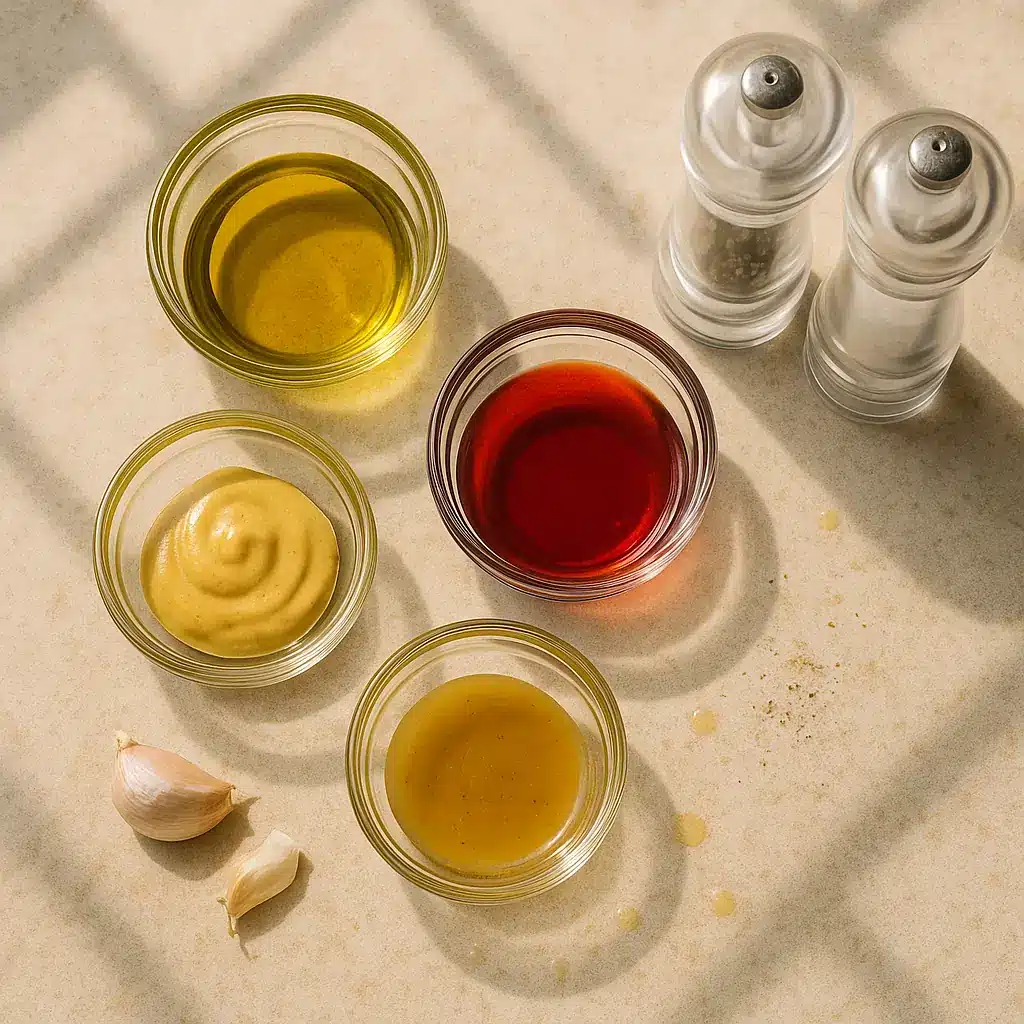
You can have some fun with vinegar. If you prefer sweet and tangy flavours, balsamic vinegar is a timeless option. However, don’t overlook apple cider vinegar for a fruity burst or red wine vinegar for sharpness. On a whim, I once tried champagne vinegar, and my dressing tasted like it came from a fine dining establishment.
Every vinegar alters the overall atmosphere. Sherry vinegar tastes earthy and rich, like fall in a bottle, while balsamic gives your salad the flavour of a summer picnic. If you want to keep things light, apple cider vinegar is a great option because it has a country-fresh feel. To keep myself from getting bored, I keep at least two different vinegars in my pantry, and if you want more inspiration, check out my guide to salad dressings
My Foolproof Method for Getting the Ratio Right
Most people are confused by the ratio, but it’s actually the basis of a traditional oil and vinegar salad dressing. Most chefs recommend starting with the standard three-parts-oil-to-one-part-vinegar formula, since it produces a balanced oil and vinegar vinaigrette that works with almost any salad. For my part, I tend to favor a 2:1 blend and like something a little sharper. If this is your first time making oil and vinegar dressing, start with the traditional 3:1 ratio and tweak it until it suits your palate.
The ratio is important, but so is the technique. I begin by whisking the vinegar with a small spoonful of mustard and a little honey to help stabilize the emulsion and lessen its acidity. Whisk steadily to ensure that everything binds together as you gradually drizzle in the oil. The dressing separated in a matter of minutes when I threw everything into a jar and gave it a good shake. Whisking gives you a silky, restaurant-style finish, a much smoother texture, and aids in the vinaigrette’s adherence to the greens.
Tips for Customizing with Herbs, Spices, and Extras
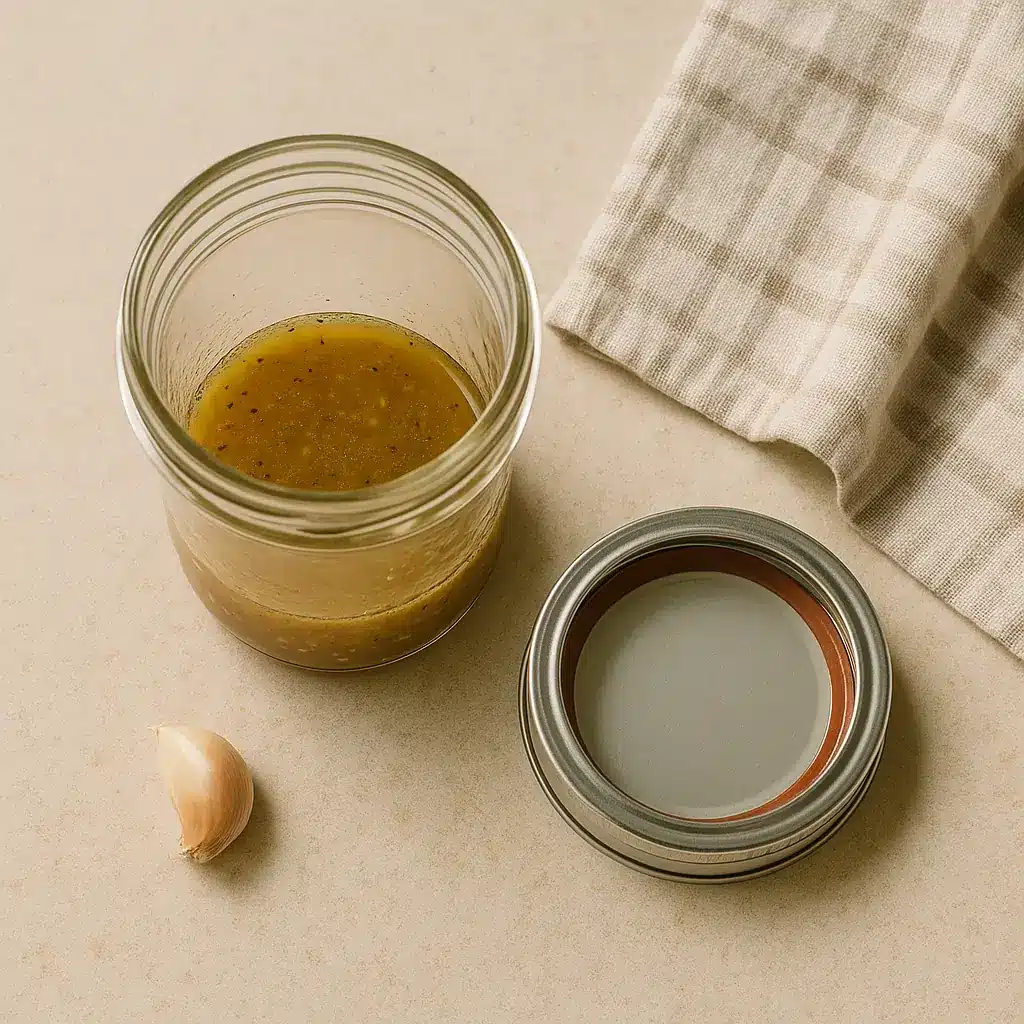
Once you understand the basics of making an oil and vinegar dressing, this is where the fun starts. Dried oregano or thyme add a Mediterranean twist, while fresh herbs like parsley or basil give it a bright, vibrant flavor. A pinch of red pepper flakes is perfect if you like a little heat. Before adding the oil, I like to add a clove of garlic to the vinegar. This gives the entire oil and vinegar dressing a strong flavor that elevates the entire salad.
I’ve added a little soy sauce or even some grated Parmesan cheese for a cheesy, salty taste when I’m craving something savory. I once made the best fruity vinaigrette I’ve ever made by adding a teaspoon of raspberry jam on a whim. Once you grasp the foundation of a good oil and vinegar dressing, you can play around with it indefinitely.
Storing and Troubleshooting Homemade Dressing
The good news is that homemade dressing does not last as long as bottled dressing. It is genuine and fresh, and if stored in the refrigerator, it should be used within a week. In order to shake it up before using, I typically make small batches in a mason jar. Simply leave it at room temperature for a few minutes if it solidifies (olive oil loves to do this when it’s cold).
Now, don’t freak out if your dressing continues to separate too quickly. To make the oil and vinegar work well together, add a dab of mayo or even a teaspoon of Dijon mustard. A drizzle of honey or maple syrup balances it out if it’s too tangy. Too greasy? Add more vinegar and splash. The key is to taste as you go.
Conclusion: Why Homemade Beats Bottled Every Time
Oil and vinegar dressing is ultimately evidence that simplicity is best. You get flexibility, taste, and health benefits all at once. Additionally, you avoid all those strange additives that are present in bottled versions and save money. You’ll discover that you can create a new version every week and never grow weary of it once you begin experimenting with oils, vinegars, and herbs.
My challenge is to try making your own the next time you reach for that bottle in the refrigerator. Try varying the ratios, adding garlic covertly, or adding that random vinegar you happened to buy on sale. You won’t ever look back, I promise. Additionally, please share your favourite combo in the comments section. I’d love to take your brilliant ideas and learn from them!