
A good salad dressing can completely change a meal. I learned that the hard way years ago after serving a big bowl of greens with a bland bottled dressing that tasted… well, tired. Since then, I’ve relied on homemade balsamic vinaigrette. It’s quick, inexpensive, and honestly tastes fresher than almost anything you can buy.
Balsamic vinaigrette is one of those simple kitchen basics that feels fancy but is actually easy to make. With just a few pantry ingredients—balsamic vinegar, olive oil, mustard, and a little sweetness—you can create a balanced dressing that works on salads, roasted vegetables, and even sandwiches.
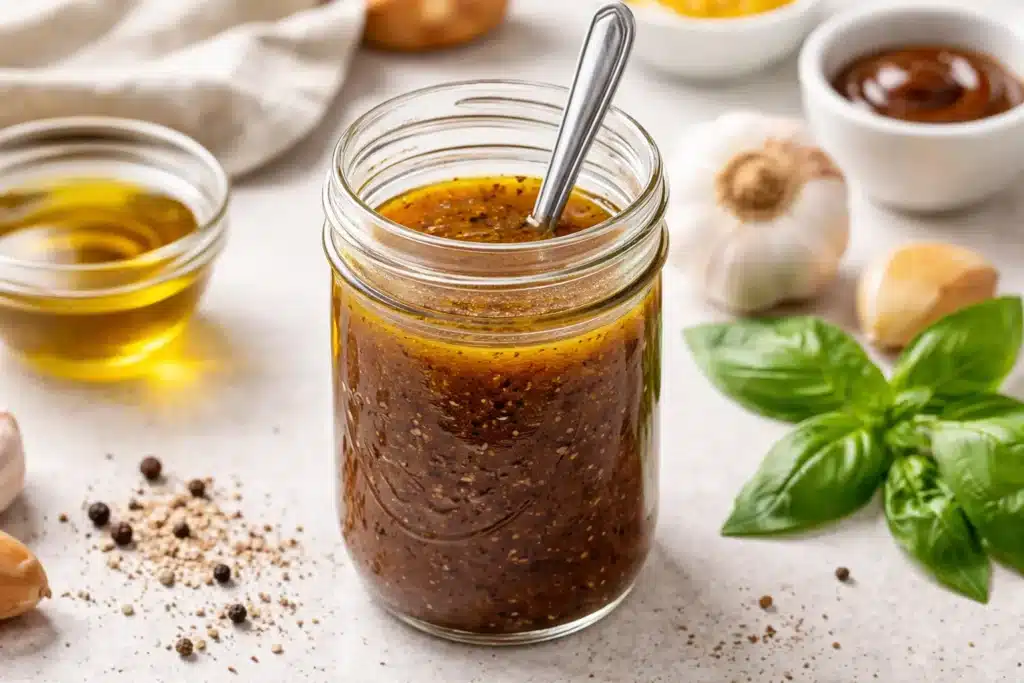
Table of Contents
Table of Contents
What Is Balsamic Vinaigrette?
Balsamic vinaigrette is a classic salad dressing made by combining balsamic vinegar with oil, usually olive oil. The vinegar provides tangy sweetness, while the oil smooths out the acidity and gives the dressing a richer texture.
Most recipes also include Dijon mustard, which helps emulsify the dressing so the oil and vinegar stay blended longer. A small amount of honey or maple syrup is often added to balance the acidity. Salt, black pepper, and garlic bring extra depth.
The flavor is what makes this dressing so popular. It’s slightly sweet, tangy, and savory all at once. Because of that balance, balsamic vinaigrette pairs well with many ingredients like leafy greens, tomatoes, cucumbers, goat cheese, nuts, grilled chicken, and roasted vegetables.
Another advantage is how customizable it is. You can add herbs like basil or oregano, swap garlic for shallots, or adjust the sweetness depending on your taste. Once you understand the basic formula, it becomes very easy to adapt.
Easy Homemade Balsamic Vinaigrette Recipe
One thing I appreciate about this dressing is that it doesn’t require complicated measurements. The classic ratio is 3 parts oil to 1 part vinegar, which keeps the flavor balanced.

Balsamic Vinaigrette
Ingredients
- 1/4 cup balsamic vinegar
- 3/4 cup extra virgin olive oil
- 1 tablespoon Dijon mustard
- 2 teaspoons Honey adjust to taste
- 1 small garlic clove minced
- 1/2 teaspoon salt
- 1/4 teaspoon black pepper
Instructions
- Add the balsamic vinegar, Dijon mustard, honey, minced garlic, salt, and black pepper to a bowl or jar.
- Whisk the ingredients together until well combined.
- Slowly drizzle in the olive oil while whisking continuously until the dressing becomes smooth and emulsified.
- Taste and adjust seasoning if needed, adding more honey for sweetness or vinegar for extra tang.
- Serve immediately or store in an airtight container in the refrigerator for up to one week. Shake well before using.
Notes
- If using a jar, you can add all ingredients and shake vigorously instead of whisking.
- The classic vinaigrette ratio is 3 parts oil to 1 part vinegar, which keeps the dressing balanced.
- Let the dressing sit for about 10 minutes before serving to allow the flavors to blend.
If you’re in a hurry, you can simply place all ingredients in a jar with a lid and shake well. I do this more often than I probably should—it’s quick and works just fine.
The key step is tasting the dressing before serving. Some balsamic vinegars are sweeter than others, so you may need to add a little more oil, vinegar, or honey to get the balance right.
Tips for the Best Flavor
Even though balsamic vinaigrette is simple, a few small details make a big difference.
First, use good olive oil. It doesn’t have to be expensive, but a decent extra-virgin olive oil will give the dressing a smoother, more pleasant flavor.
Second, don’t skip the salt. Without it, the dressing can taste flat even if the ingredients are good. A small pinch usually brings everything together.
Another tip is to let the dressing sit for about 10 minutes before using it. This allows the garlic and mustard to blend with the vinegar and oil, giving the vinaigrette a more balanced taste.
If the dressing separates while sitting, that’s normal. Homemade vinaigrettes don’t contain stabilizers like bottled ones. Just shake or whisk it again before using.
Ways to Use Balsamic Vinaigrette
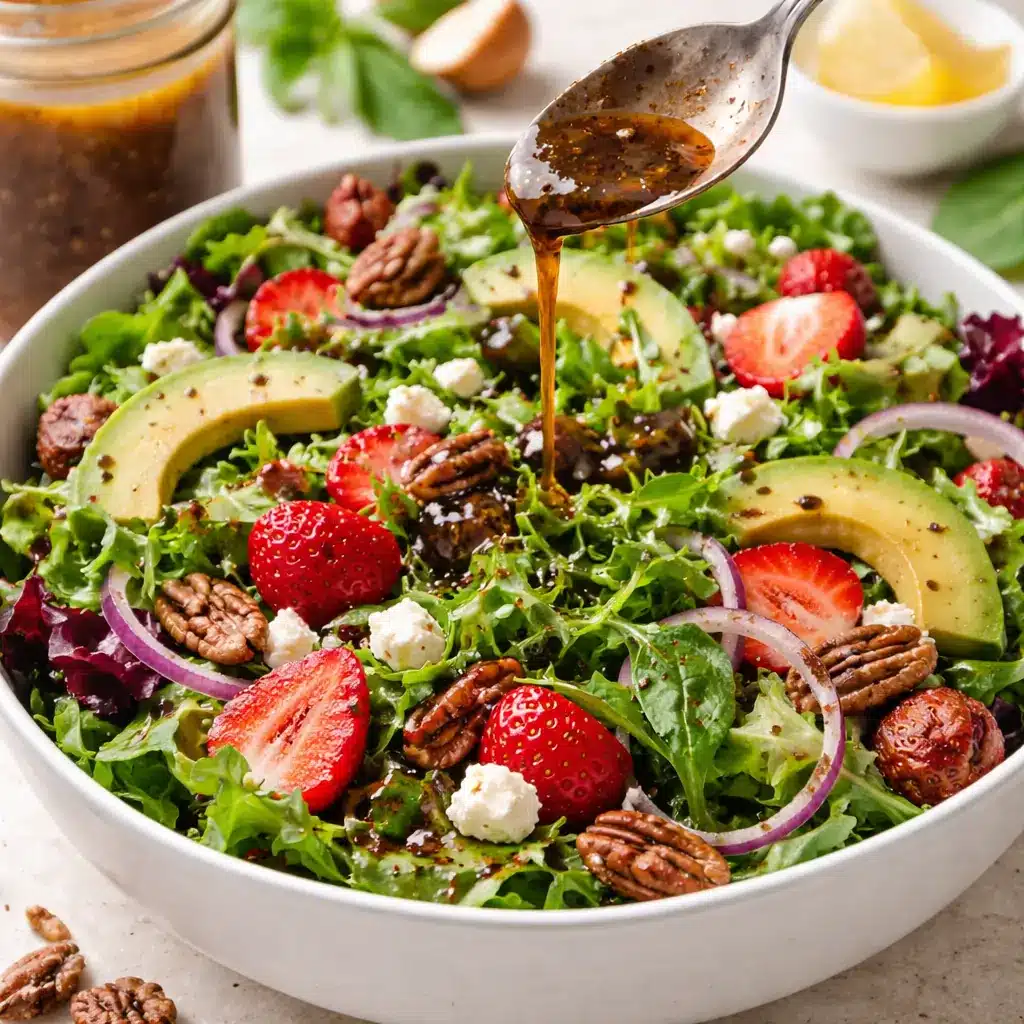
Most people use balsamic vinaigrette on salads, and it works beautifully with mixed greens, spinach, arugula, and kale. It pairs especially well with ingredients like strawberries, walnuts, goat cheese, and tomatoes.
But salads are only the beginning.
This dressing is excellent on roasted vegetables such as Brussels sprouts, carrots, zucchini, and asparagus. A light drizzle after roasting adds brightness and depth.
Balsamic vinaigrette can also be used as a quick marinade for chicken, mushrooms, or tofu. The acidity helps tenderize ingredients while adding flavor.
Another easy idea is using it on grain bowls with quinoa, rice, or farro. Combined with vegetables and protein, it creates a simple but satisfying meal.
Conclusion
Balsamic vinaigrette is one of the easiest and most versatile dressings you can make at home. With a few basic ingredients and a simple ratio of oil to vinegar, you can create a flavorful dressing that works on salads, vegetables, grain bowls, and more.
Once you start making it yourself, it’s easy to adjust the sweetness, acidity, and seasoning to match your taste. That flexibility is what makes homemade vinaigrette so useful in everyday cooking.
Try making a batch and experiment with different herbs or flavors. You might find, like I did, that this simple dressing becomes a regular part of your kitchen routine. If you’d like to explore more homemade dressing ideas, check out this complete guide to salad dressings.